How LeadLane built a technically robust ICP for SimCog's BOMcast and reached a 40% account-to-meeting conversion within a few weeks
SimCog builds machine-learning solutions for industrial processes. With BOMcast, the team has created a product that starts exactly where classic variant configuration and conventional CPQ logic reach their limits: with individual requirements outside known standard cases. BOMcast uses historical engineering and order data to derive reliable bill-of-materials proposals. The leverage is greatest for manufacturers with a high number of variants, complex assemblies, and engineering knowledge that has grown over decades. That is precisely what made the go-to-market demanding: BOMcast is not a product for "mechanical engineering in general" but for very specific technical contexts.
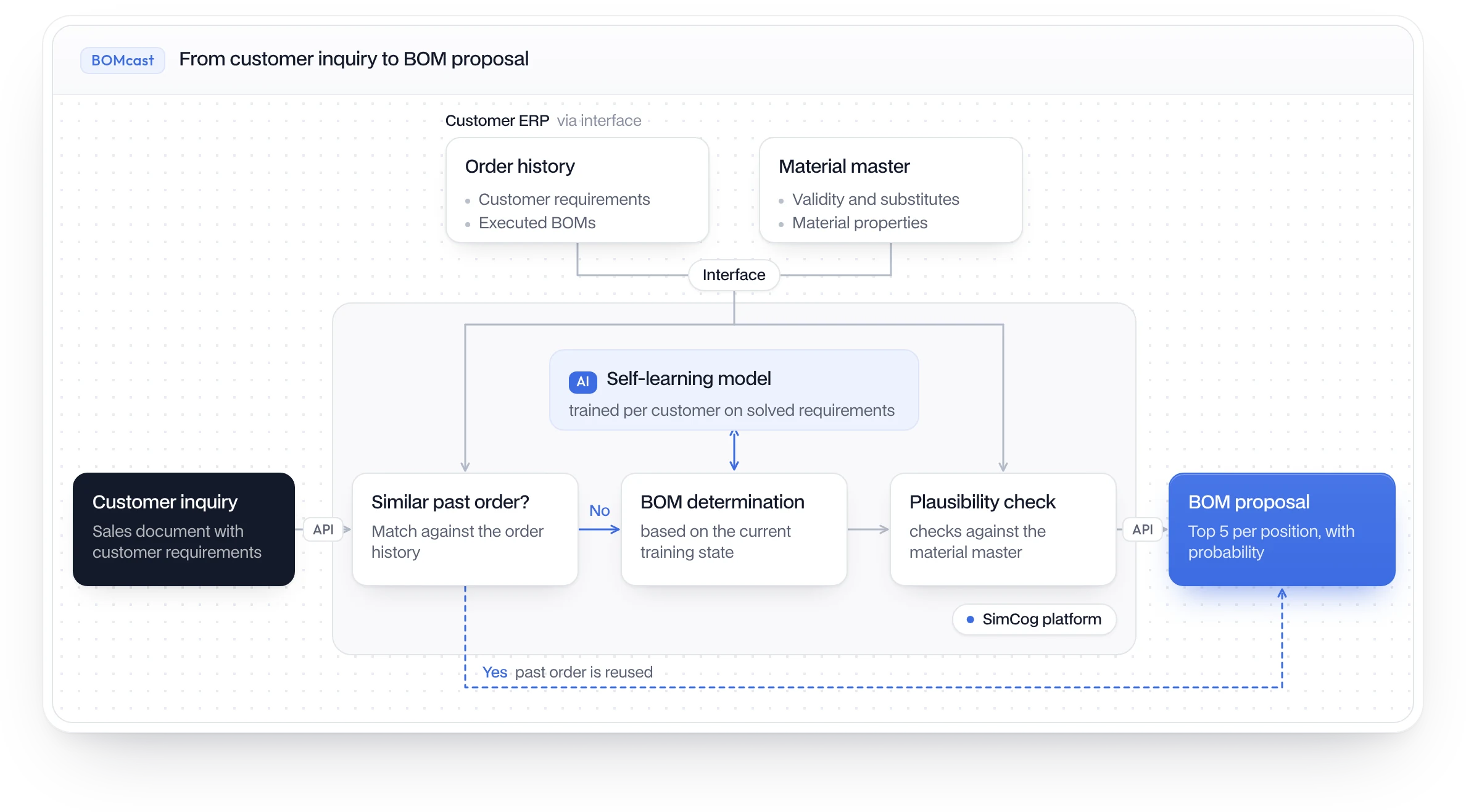
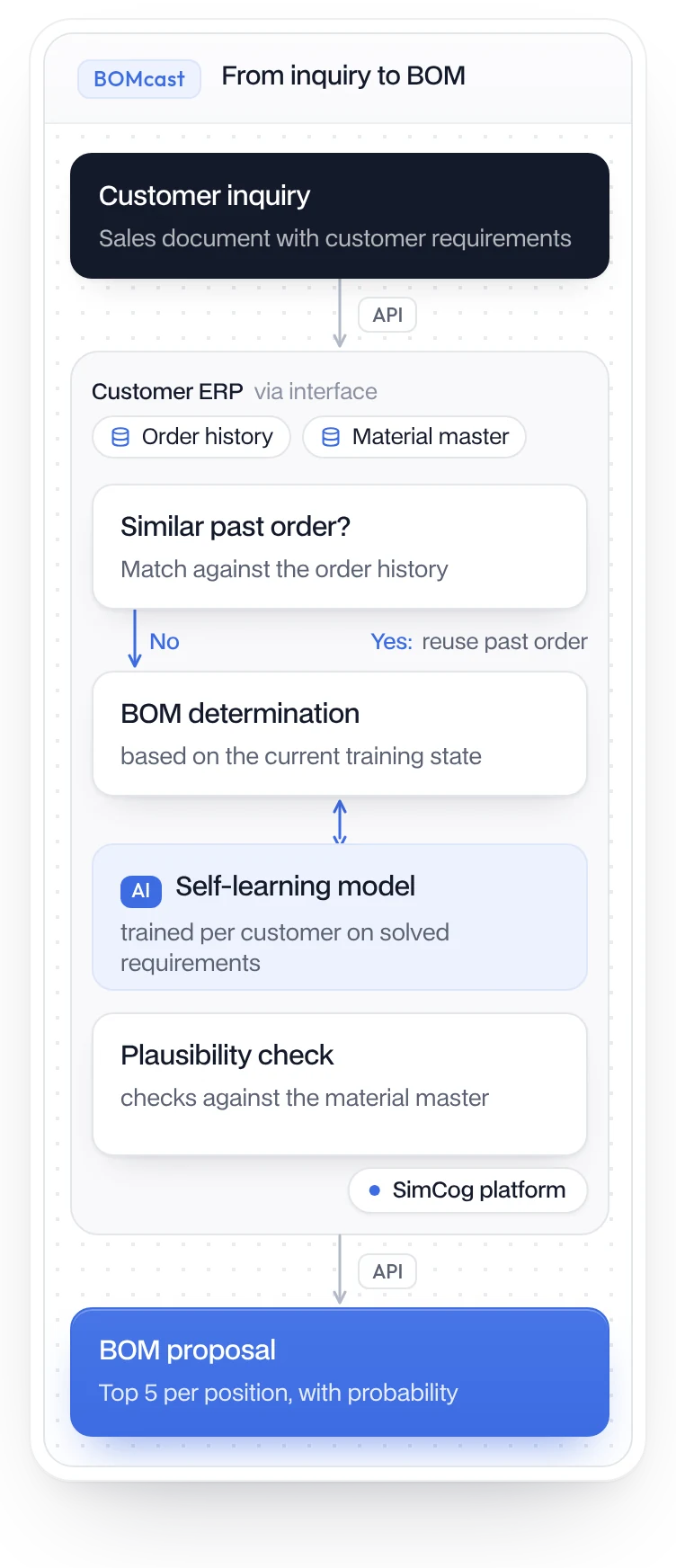
When we started with SimCog, there were already good initial hypotheses, but no robust, data-based picture of which companies really have the strongest fit for BOMcast. For technically demanding products, the ideal target customer is not primarily defined by industry, revenue, or headcount, but by the technical reality inside the company. In the case of BOMcast, the most relevant questions were:
So the goal was not to approach as many companies as possible. The goal was to identify the right technical target accounts.
Instead of working on a theoretical ICP for months, we went straight into the market together with SimCog, using the best available assumptions. Our goal was not to define the perfect target customer purely conceptually in advance, but to validate it quickly through real market interaction.
After roughly two weeks, the first qualified meetings took place. These early appointments were not just sales wins for us — above all, they were valuable learning signals. They showed us which company profiles resonate, which use cases are actually relevant, and which contacts in the buying center carry the highest relevance.
This is exactly where LeadLane's platform approach plays to its strengths. We don't just use the information from target accounts, reactions, conversation histories, and qualification signals operationally — we systematically consolidate it to continuously improve our search, prioritization, and outreach logic. This allowed us to refine the ICP criteria during the running process, AI-based and algorithmically — both at the account level and in the outreach itself. In other words: we didn't just make the list better, we also learned more precisely who to approach, why to approach them, and how to position BOMcast's technical value cleanly in the market.
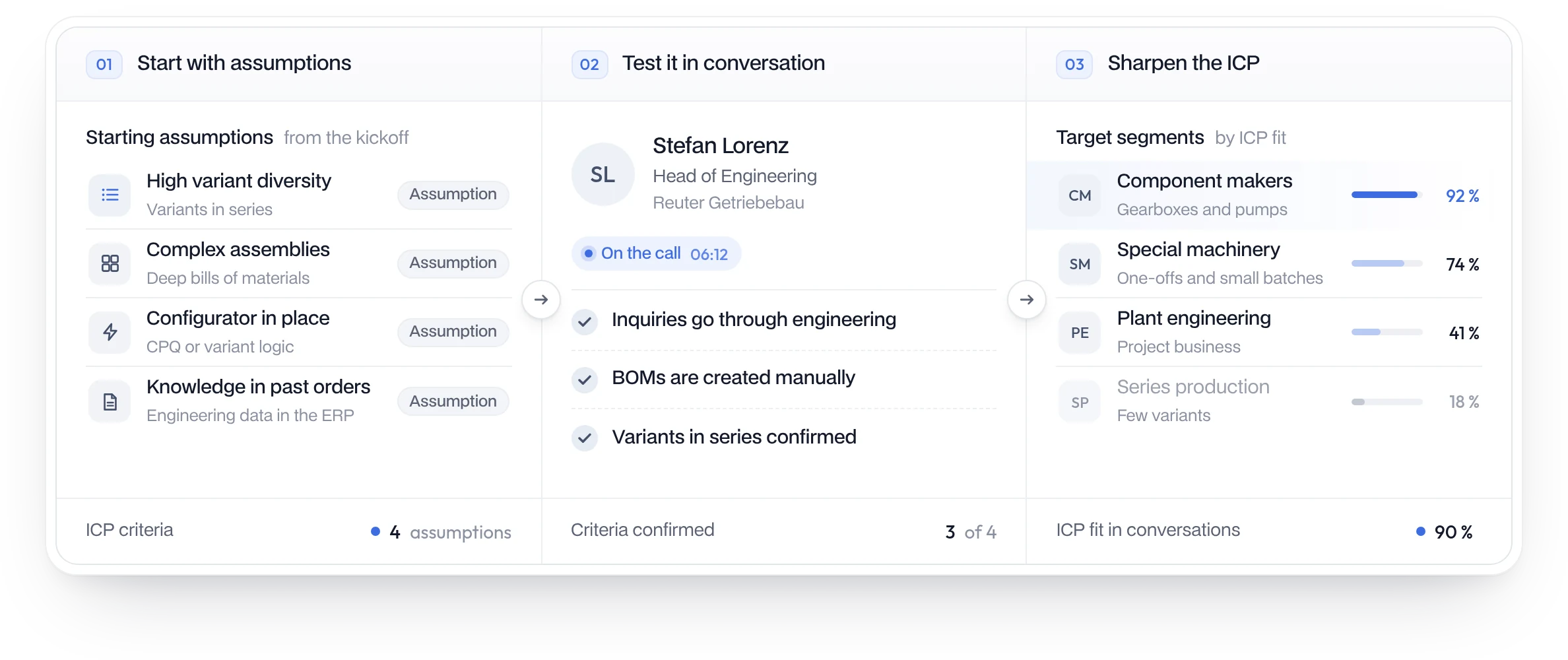
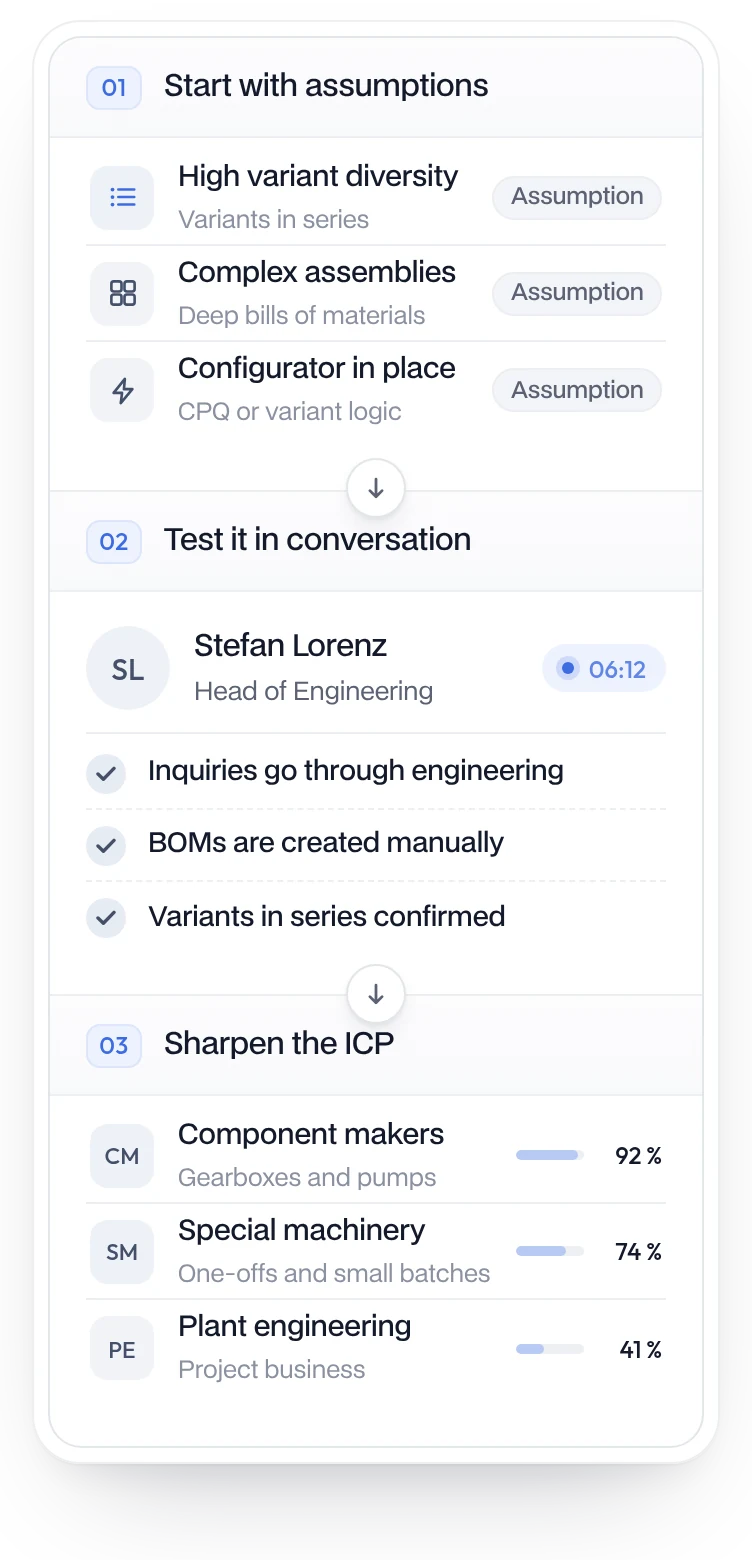
The results show that this approach works. The campaign currently stands at:
This is particularly strong because we are not primarily talking to generic business roles here, but often to very technical contacts such as R&D managers and similar expert roles.
In target groups like these, classic outreach is not enough. The use case has to be framed correctly on a technical level, and the technical fit has to be sensibly pre-qualified before the first conversation. That is exactly where the platform approach helped us: by continuously consolidating market and conversation signals, we made the selection criteria for suitable accounts increasingly precise while tailoring the outreach to the actual technical realities of the target companies.
The conversion is therefore not just the result of good execution, but also the expression of a systematic learning process. The better we understood which technical patterns, data situations, and organizational structures indicate a real fit, the more precisely we could target — and the more relevant the conversations became.
The BOMcast case shows very clearly what matters in industrial tech sales. The bottleneck is often not a lack of reach or lead volume, but a blurry ICP. If the technical fit is not properly understood, you may get first conversations, but no robust pipeline. That is why our contribution in this case was more than pure lead generation. LeadLane helped SimCog open up the market for a complex product in a structured way, cleanly qualify technical target accounts, and sharpen the ICP based on data. An early campaign thus produced not just more activity, but a solid foundation for further growth. In short: we didn't just generate leads for BOMcast — we helped identify the technically right market.